
Acne Treatment in Palwal Haryana: Causes and Solutions
Acne is one of the most common skin concerns across teenagers and adults, yet it is often misunderstood. Many people believe pimples happen only because of oily skin, poor hygiene, or using the wrong face wash. In reality, acne develops due to a combination of factors including oil production, hormonal changes, inflammation, genetics, and blocked pores.
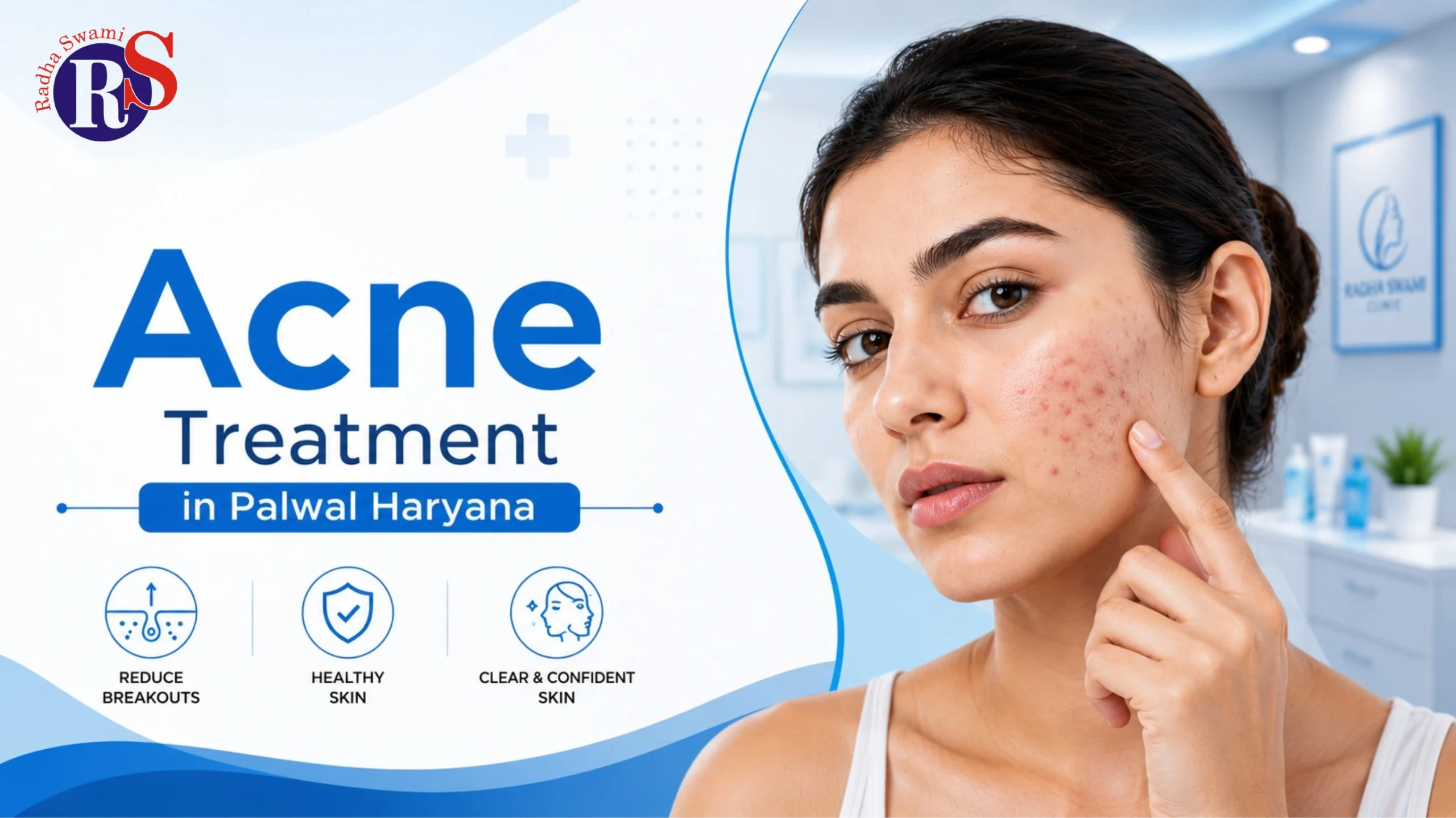
While occasional breakouts may improve with basic skincare, persistent or recurring acne often requires proper evaluation and a structured treatment plan.
If you are searching for information about acne treatment in Palwal Haryana, this guide explains common causes of acne, available treatment approaches, habits that may worsen breakouts, and when it may be appropriate to consult a dermatologist.
What Is Acne? Acne Treatment in Palwal Haryana
Acne is a skin condition that develops when hair follicles become blocked with oil (sebum), dead skin cells, and other debris. This blockage may create an environment where inflammation develops and different types of lesions appear on the skin.
Acne commonly affects:
- Face
- Forehead
- Nose
- Chin
- Chest
- Upper back
- Shoulders
Although acne is often associated with teenage years, adults can also experience breakouts well into their 20s, 30s, and beyond.
Common Causes of Acne | Acne Treatment in Palwal Haryana
Understanding the underlying cause is important because treatment may vary depending on what is triggering breakouts.
1. Excess Oil Production
Sebaceous glands naturally produce oil to protect the skin. When excess oil combines with dead skin cells, pores may become blocked and acne can develop.
People with oily skin may notice more frequent breakouts, but acne can affect all skin types.
2. Hormonal Changes
Hormones play an important role in acne.
Common situations associated with hormonal fluctuations include:
- Teenage years
- Menstrual cycle changes
- Adulthood
- Pregnancy
- Hormonal imbalance
Hormonal acne often appears around:
- Chin
- Jawline
- Lower cheeks
3. Genetics
Acne Treatment in Palwal Haryana. Family history can influence how easily acne develops.
If parents experienced moderate to severe acne, there may be a higher tendency toward recurring breakouts.
4. Blocked Hair Follicles
When dead skin cells are not shed efficiently, pores may become clogged and lead to whiteheads or blackheads.
5. Lifestyle and Environmental Factors
Some habits may contribute to worsening acne:
- Frequent touching of the face
- Heavy cosmetic products
- Poor makeup removal
- Stress
- Lack of sleep
- Wearing tight sports equipment
- Humid weather
Different Types of Acne | Acne Treatment in Palwal Haryana
Not all acne looks the same.
Whiteheads
Closed clogged pores appearing as small white bumps.
Blackheads
Open pores that darken due to oxidation.
Papules
Small red inflamed bumps.
Pustules
Pimples containing visible pus.
Nodules
Large painful lesions deeper under the skin.
Cystic Acne
Inflamed lesions that may increase the likelihood of scarring.
Identifying the type of acne can help determine suitable treatment options.
Why Acne Sometimes Leaves Marks Behind
Acne Treatment in Palwal Haryana. Many people notice that acne improves but marks remain.
These marks may appear due to:
- Inflammation
- Picking or squeezing pimples
- Delayed treatment
- Deep acne lesions
Common post-acne changes include:
- Dark marks
- Redness
- Uneven texture
- Depressed scars
Preventing repeated inflammation may help reduce the likelihood of long-term marks.
Acne Treatment Options | Acne Treatment in Palwal Haryana
Treatment depends on factors such as age, severity, skin type, and duration of symptoms.
1. Topical Treatment Options
Topical approaches may be considered for mild to moderate acne.
These can include ingredients aimed at:
- Reducing clogged pores
- Managing oil production
- Supporting skin renewal
- Addressing inflammation
Treatment recommendations should always depend on individual skin needs.
2. Oral Treatment Options
For moderate or persistent acne, oral treatment approaches may sometimes be considered.
These are typically selected based on:
- Acne severity
- Hormonal factors
- Medical history
- Skin sensitivity
Not every patient requires oral treatment.
3. Acne Scar Management Approaches | Acne Treatment in Palwal Haryana
Once active acne becomes controlled, treatment discussions may shift toward improving visible marks or texture concerns.
Approaches may vary depending on scar type.
Examples may include:
- Surface-focused procedures
- Texture-focused procedures
- Pigmentation-focused approaches
Results can vary between individuals.
Habits That May Be Making Acne Worse
Some daily habits unintentionally contribute to breakouts.
Overwashing the Face
Washing repeatedly does not remove acne and may irritate the skin.
Picking Pimples
Touching or squeezing pimples may increase inflammation and visible marks.
Using Too Many Products
Layering multiple active products may disrupt the skin barrier.
Skipping Sunscreen
Sun exposure may contribute to visible post-acne pigmentation.
Constant Product Switching
Changing skincare frequently can make it difficult to evaluate what actually works.
Acne Myths That People Still Believe | Acne Treatment in Palwal Haryana
Myth 1: Acne Happens Due to Poor Hygiene
Acne is not caused simply by not washing your face.
Myth 2: Only Teenagers Get Acne
Adult acne is common.
Myth 3: Toothpaste Can Treat Pimples
Home remedies may irritate skin and are not universally suitable.
Myth 4: Oily Skin Does Not Need Moisturizer
Hydration and oil production are not the same thing.
When Should You Visit a Dermatologist?
It may be worth seeking medical evaluation if:
- Acne persists for months
- Breakouts become painful
- Acne leaves marks
- Store-bought products are not helping
- Breakouts affect confidence or daily life
- Acne spreads beyond the face
Early assessment may help identify triggers and avoid unnecessary trial-and-error.
Acne Treatment in Palwal Haryana
People looking for acne treatment in Palwal Haryana often search for quick solutions, but acne management usually works best when treatment is matched to the individual rather than copied from trends or social media advice.
Skin concerns may differ based on:
- Skin type
- Acne severity
- Hormonal influence
- Duration of breakouts
- Existing marks or scars
A structured approach generally starts with understanding the skin concern, creating a treatment plan, and monitoring progress over time.
The goal is not simply reducing visible pimples but supporting long-term skin health and preventing unnecessary irritation.
Frequently Asked Questions
Can acne go away naturally?
Mild acne may improve over time in some people, but persistent acne may benefit from professional evaluation.
Does diet cause acne?
Diet alone is rarely the only cause, although some people notice patterns with certain foods.
Can acne leave permanent scars?
Inflammation and delayed treatment may increase the likelihood of long-term marks.
Is acne treatment permanent?
Results vary depending on triggers, skincare habits, and individual skin factors.
How long does acne treatment usually take?
Improvement timelines vary and depend on acne type and treatment approach.
Should I stop skincare products during acne?
Not necessarily. A simple and suitable routine is often preferred over stopping everything.
Final Thoughts
Acne is more complex than a temporary cosmetic issue. Different factors including oil production, hormones, genetics, and inflammation can influence why breakouts happen and why they return.
Understanding the cause is often the first step toward choosing the right solution.
If breakouts continue despite routine skincare, or if acne is leaving marks, seeking proper evaluation may help create a more structured and informed approach to skin care decisions.